


September 3, 2025Los Angeles
the collapse of the talent stack
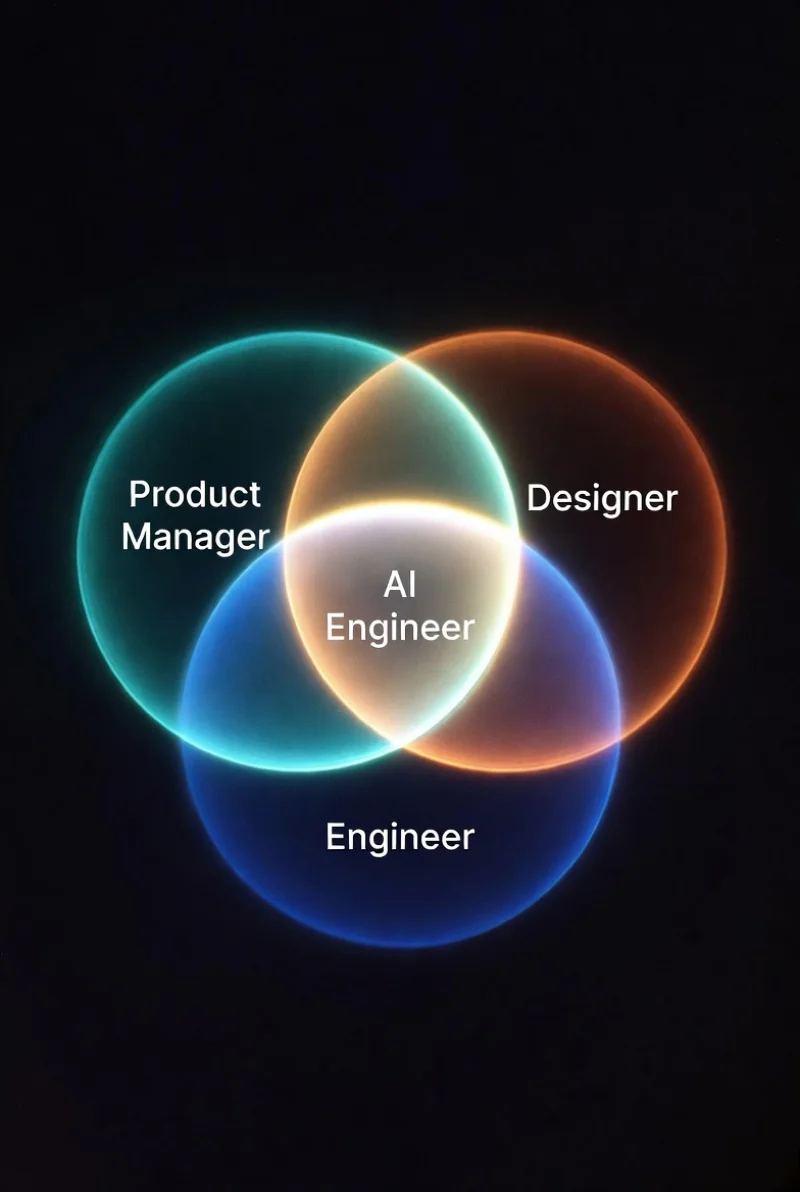
after looking at several dozen teams and hearing directly from some of the fastest growing AI startups.. bolt, gumloop, gamma, datalab.. i saw the same pattern everywhere.
small AI-native businesses doing millions in ARR within a short time window.
$0-20m ARR in 60 days.
15 people for bolt.
there is a collapse of the talent stack.
here's what i mean.
speed is truly everything.
once you grow past 5-6 people, communication overhead starts eroding the surface area you can build for customers.
the PM role isn't disappearing.
it's collapsing inward into design, frontend flows, copy, prototyping, customer marketing, sales.
a good PM is still needed to shape signal from noise.
but now they also need to prototype, orchestrate, and ship narrative.
i read a lot of scottbelsky and he says it well.. "the product ends up looking like the org."
so if you want your product to feel cohesive, quick to use, and clearly opinionated.. your team has to be small, fast-moving, and aligned around a shared narrative.
put another way.
a fragmented team builds a fragmented experience.
a tightly-knit team builds a fluid one.
disjointed org leads to clunky UX.
clear roles plus tight loops leads to elegant interface.
also worth noting.. in these small AI-native teams, everyone's technical.
everyone's product-minded.
it's what makes their growth velocity possible.
the coordination cost that used to justify large teams is now the thing killing them.
every handoff is a tax.
every meeting about alignment is time not spent building.
the teams winning right now are the ones where three people can do what thirty used to.
not because they're working harder.
because the tools collapsed the stack and they were ready for it.
aistartupsteamsvelocity